Physical Address
304 North Cardinal St.
Dorchester Center, MA 02124
Physical Address
304 North Cardinal St.
Dorchester Center, MA 02124
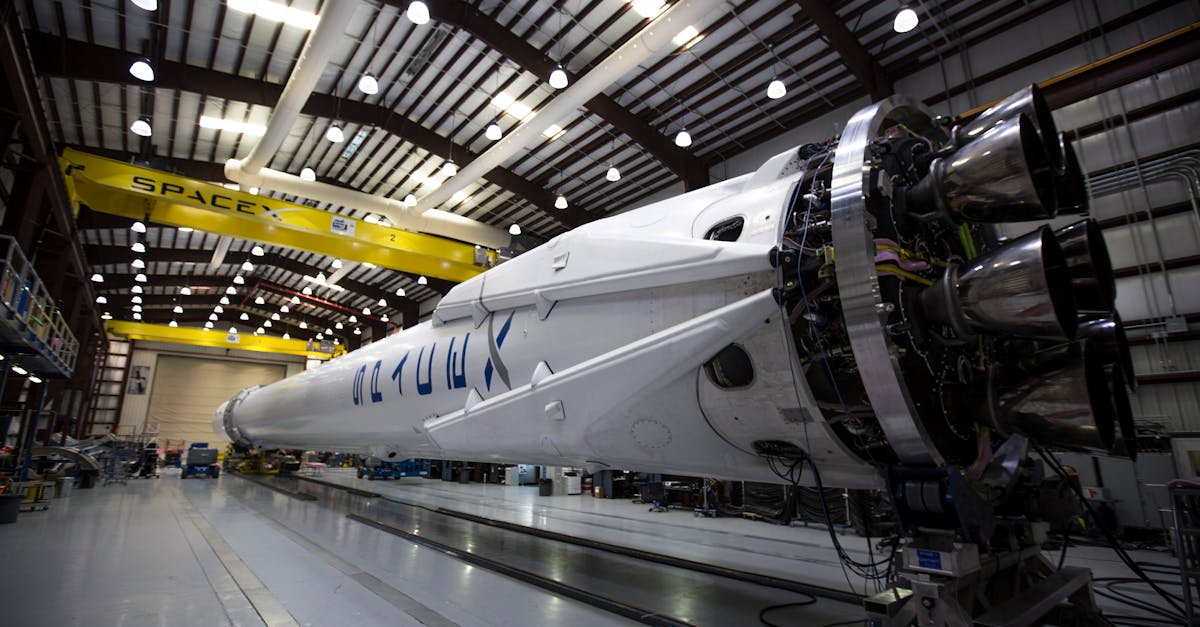
Elon Musk is the founder and owner of SpaceX, a private aerospace company he established in 2002 with the goal of transforming space exploration and making life multiplanetary. At the time, space travel was largely dominated by government agencies and extremely high costs limited innovation. Musk believed that by building reusable rockets and developing new technologies, space exploration could become more affordable, efficient, and accessible.
After selling his previous companies, including PayPal, Elon Musk invested a significant portion of his personal wealth into creating SpaceX. His vision was not just to launch satellites or spacecraft, but to fundamentally change how humanity explores space. Under his leadership, SpaceX focused on reducing launch costs, increasing reliability, and accelerating technological progress in aerospace engineering.
Over the years, SpaceX has achieved several historic milestones, including becoming the first private company to send a spacecraft to the International Space Station, successfully landing reusable rockets, and launching a global satellite internet network through Starlink. These achievements have positioned SpaceX as one of the most influential companies in the modern space industry.
Today, Elon Musk remains the driving force behind SpaceX’s long-term mission to make space travel sustainable and ultimately enable human life on other planets. His role as founder and CEO continues to shape the company’s ambitious goals, including missions to the Moon and Mars, redefining the future of space exploration.
The global space industry is entering one of its most transformative periods, and at the center of this revolution stands SpaceX. As 2026 approaches, expectations are rising around what the company plans to achieve next. With ambitious missions, advanced spacecraft, and a bold vision for humanity’s future beyond Earth, SpaceX’s upcoming launches could redefine space exploration as we know it.
This new era is not just about rockets or technology it represents a shift in how humans explore, inhabit, and utilize space. The year 2026 is shaping up to be a milestone in that journey.
SpaceX was founded with a long-term vision: making humanity a multi-planetary species. Unlike traditional space agencies, its approach focuses on reusability, cost reduction, and rapid innovation. By 2026, the company aims to move closer to that vision through large-scale missions involving advanced spacecraft, deep-space exploration, and global connectivity.
The primary goals for SpaceX in this phase include:
Each of these goals plays a crucial role in shaping the future of space travel.

The first stage is about 70% of the rocket’s cost. It uses grid fins for steering, powerful engines for landing, and helium to deploy the fins. The stage lands vertically using one to three engines.
Falcon 9 can carry payloads of up to 22,800 kilograms to low Earth orbit and 8,300 kilograms to geostationary transfer orbit. It’s made of aluminum-lithium alloy and has a height of 70 meters and a diameter of 3.7 meters.
At the heart of SpaceX’s plans is Starship, the most powerful launch system ever developed. Designed to be fully reusable, Starship represents a major leap forward compared to traditional rockets.
By 2026, SpaceX aims to:
Unlike previous spacecraft, Starship is built to carry both humans and cargo to destinations such as the Moon, Mars, and beyond. Its massive payload capacity and reusability could fundamentally change how space missions are planned and executed.
One of SpaceX’s long-term goals is to make humanity a multi-planet species. The company envisions future missions that extend beyond low Earth orbit toward lunar bases and eventual Mars settlements.
The 2026 timeline is expected to play a critical role in:
These missions are not just symbolic they are designed to gather data and experience needed to support sustainable human life beyond Earth.
Another key part of SpaceX’s strategy is the expansion of Starlink, its satellite-based internet service. By 2026, the constellation is expected to grow significantly, providing high-speed, low-latency internet to remote and underserved regions worldwide.
This expansion will:
Starlink also plays a strategic role in funding SpaceX’s larger ambitions, helping finance deep-space exploration projects.
One of SpaceX’s greatest achievements has been making reusable rockets a reality. Reusability has transformed the economics of spaceflight, reducing costs and increasing launch frequency.
By 2026, SpaceX aims to:
These advancements not only benefit SpaceX but also lower barriers for scientific research, commercial satellites, and international partnerships.
AI and automation are increasingly central to SpaceX operations. From flight navigation to real-time system monitoring, intelligent software plays a critical role in mission safety and efficiency.
In upcoming missions, AI will assist in:
This integration of AI allows SpaceX to operate at a scale and speed previously unattainable in space exploration.
SpaceX’s growth has also reshaped the global space economy. Governments, research institutions, and private companies increasingly rely on SpaceX for satellite launches and scientific missions.
By 2026, the company is expected to:
This collaborative ecosystem accelerates innovation and lowers barriers for participation in space exploration.
As space activity increases, concerns about environmental impact have also grown. SpaceX has acknowledged the importance of sustainability and continues to explore ways to minimize its environmental footprint.
Efforts include:
Balancing rapid innovation with environmental responsibility will remain a key challenge moving forward.
Despite its ambitions, SpaceX faces several challenges:
However, SpaceX’s track record of overcoming obstacles suggests it is well-positioned to navigate these challenges.
If SpaceX’s plans succeed, the next decade could mark a turning point in human history. Routine space travel, lunar exploration, and preparations for Mars missions may become a reality rather than science fiction.
The 2026 launch window is expected to play a defining role in shaping this future setting the foundation for sustainable space exploration and opening new possibilities for science, industry, and humanity itself.
The upcoming SpaceX launches in 2026 represent more than just technological milestones they symbolize a bold step toward humanity’s future in space. Through innovation, ambition, and relentless progress, SpaceX continues to push the boundaries of what is possible.
As the world watches, one thing is clear: the next chapter of space exploration is being written now, and SpaceX is at the forefront of that journey.
The year 2026 is expected to mark major progress in reusable rocket technology, deep-space missions, and large-scale deployment of Starlink satellites, making it a milestone year for the company.
Yes. Advances in satellite communication, navigation, and global internet coverage will improve connectivity, emergency response, and digital access worldwide.
SpaceX has pushed competitors to innovate faster, reduce costs, and rethink traditional spaceflight models, accelerating overall industry growth.
Starship is designed to be SpaceX’s fully reusable spacecraft capable of carrying large payloads and humans to the Moon, Mars, and beyond. It is central to the company’s long-term space exploration strategy.






[…] of the most important innovations by Upwork was the introduction of intelligent job matching. Instead of relying only on manual browsing, Upwork created algorithms […]